Local Ecotype
Perennial
Full to part sun
Moist to dry soil
18-36”, clump or colony forming
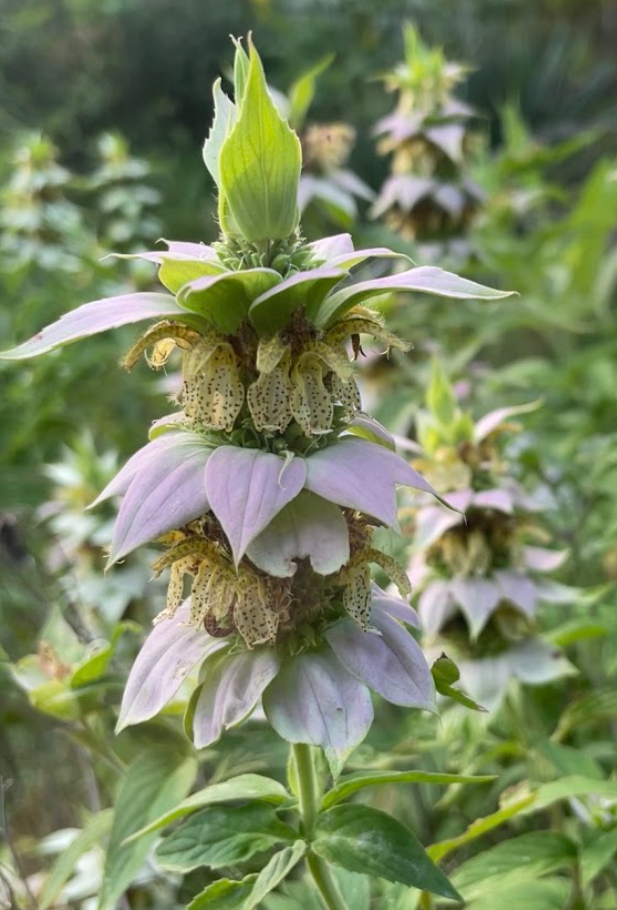
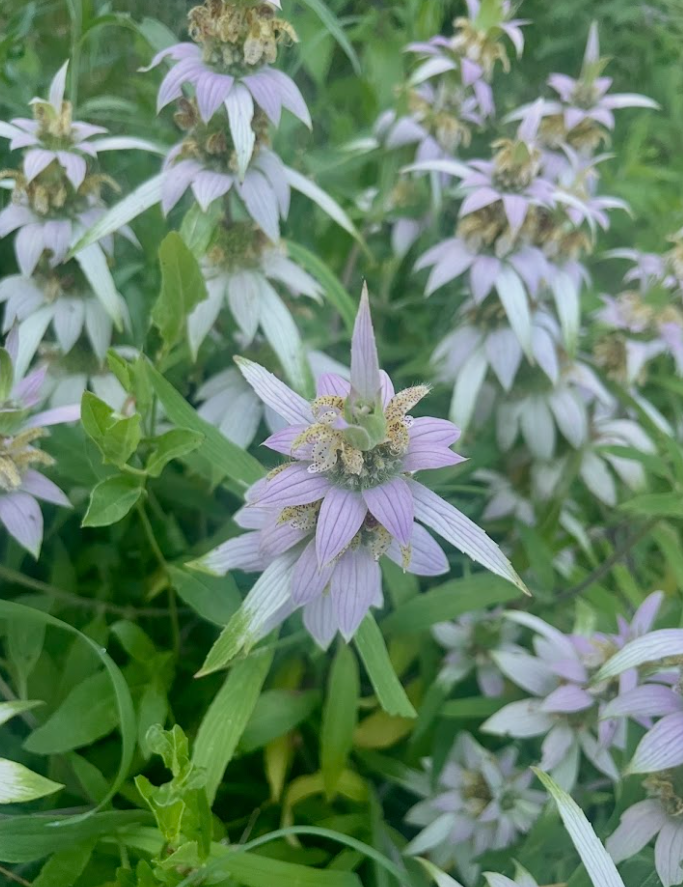
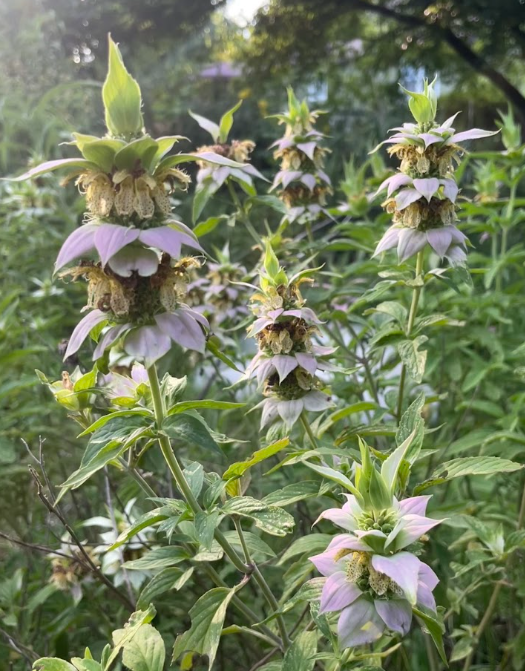
It’s hard not to love Spotted Beebalm, with its dappled yellow blossoms adorned with bright pink bracts. Like other beebalms, it is a dependable pollinator resource, visited by various bees, bee flies, butterflies, wasps, and hummingbirds. The blooming period is generally June-Aug, but occasionally may extend into October. This species is somewhat geographically variable, with local ecotypes being particularly well adapted to dry, sandy conditions.
Its fragrant foliage can be made into tea, though its scent is a bit more pungent than other beebalms.
Spotted Beebalm has excellent drought tolerance, though adequate moisture will extend the blooming period. Full sun is preferred, though some shade is well tolerated. Adequate airflow around plants will discourage powdery mildew, however local ecotypes are somewhat resistant to this issue. Spotted Beebalm is a short-lived perennial, usually living 2-5 years, but readily self-seeds in favorable conditions.
Local Ecotype
Perennial
Full to part sun
Moist to dry soil
18-36”, clump or colony forming
It’s hard not to love Spotted Beebalm, with its dappled yellow blossoms adorned with bright pink bracts. Like other beebalms, it is a dependable pollinator resource, visited by various bees, bee flies, butterflies, wasps, and hummingbirds. The blooming period is generally June-Aug, but occasionally may extend into October. This species is somewhat geographically variable, with local ecotypes being particularly well adapted to dry, sandy conditions.
Its fragrant foliage can be made into tea, though its scent is a bit more pungent than other beebalms.
Spotted Beebalm has excellent drought tolerance, though adequate moisture will extend the blooming period. Full sun is preferred, though some shade is well tolerated. Adequate airflow around plants will discourage powdery mildew, however local ecotypes are somewhat resistant to this issue. Spotted Beebalm is a short-lived perennial, usually living 2-5 years, but readily self-seeds in favorable conditions.