Local Ecotype
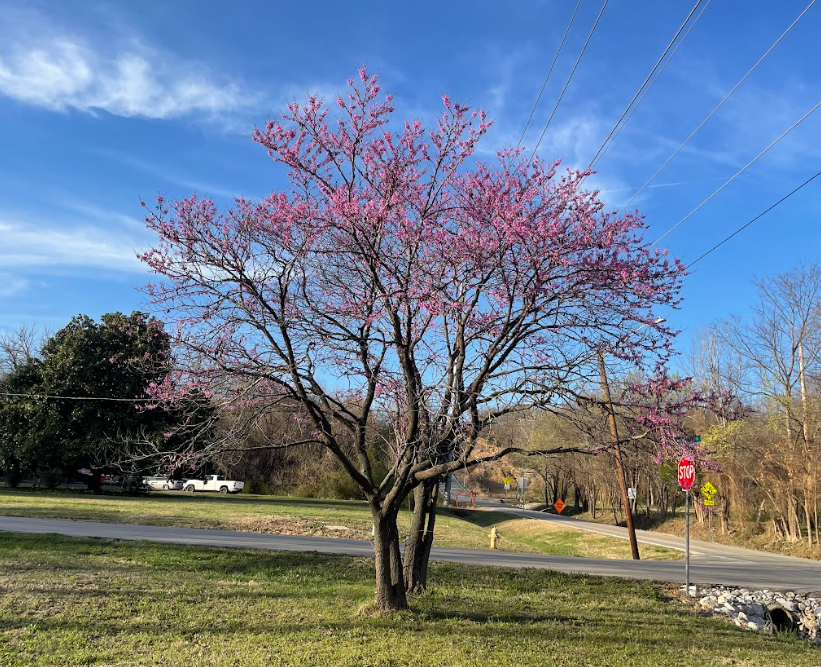
Small tree, to 20’
Full sun to part shade
Moist to dry soil
Blooms in early spring
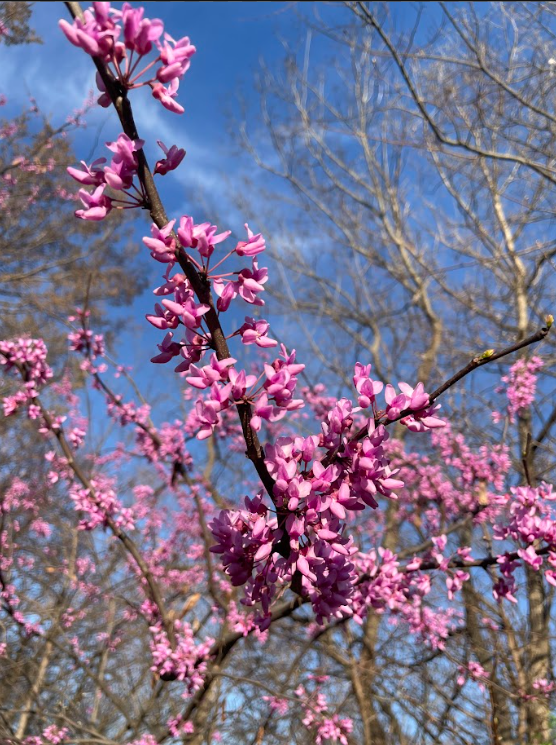
Oklahoma’s state tree. A small leguminous tree with a rounded crown. Produces clusters of brilliant flowers ranging from light pink to magenta in very early spring. In addition to being a tasty edible addition to salads, these flowers feed pollinating insects, as well as newly arriving hummingbirds.
The seed pods that follow feed game birds and small mammals. Host for the rare and elusive Henry’s Elfin. Redbuds are quick to begin blooming, often in the third or fourth year of growth.
Redbuds can be grown as a standalone tree in full sun, or in the partial shade of large mature trees. Redbuds are found in a variety of natural areas, from dry prairie to rich forests, and are thus quite adaptable in the landscape. May reach heights of up to 25 feet.
Local Ecotype
Small tree, to 20’
Full sun to part shade
Moist to dry soil
Blooms in early spring
Oklahoma’s state tree. A small leguminous tree with a rounded crown. Produces clusters of brilliant flowers ranging from light pink to magenta in very early spring. In addition to being a tasty edible addition to salads, these flowers feed pollinating insects, as well as newly arriving hummingbirds.
The seed pods that follow feed game birds and small mammals. Host for the rare and elusive Henry’s Elfin. Redbuds are quick to begin blooming, often in the third or fourth year of growth.
Redbuds can be grown as a standalone tree in full sun, or in the partial shade of large mature trees. Redbuds are found in a variety of natural areas, from dry prairie to rich forests, and are thus quite adaptable in the landscape. May reach heights of up to 25 feet.