Local Ecotype
Medium tree, to 50’
Full to part sun
Wet to medium soil
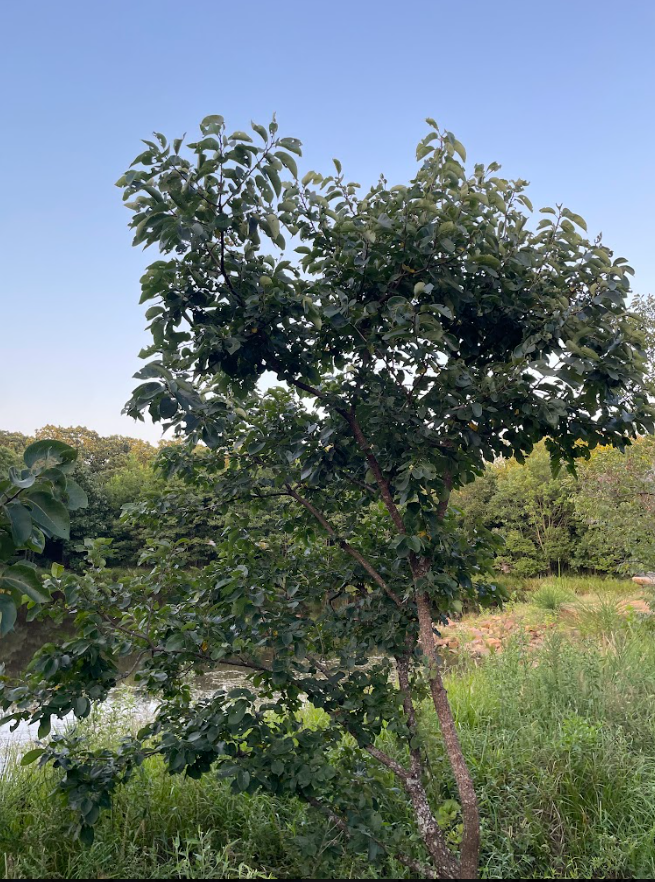
Straight trunk with limited canopy spread
Bell shaped blooms in May
An iconic North American fruit! As many are aware, Persimmons are only ripe when gooey and jam-like, and unripe fruit are incredibly astringent. This ripening period often coincides with the first couple frosts, making them a nutritious late fall bounty for wildlife when other food sources are disappearing. The incredibly sweet taste and gooey texture lends itself well to breads, pies, and other baked goods. The flowers are preceded by delicate, bell shaped blossoms in spring. Fall foliage varies from yellow and orange to reddish purple and bronze.
Persimmons are medium-sized trees around 40-80 feet, with fairly limited canopy spread. They are widely adaptable, even doing well in wet or flooded soils at the margins of ponds and wetlands, and are found in uplands and lowlands alike. Persimmon trees have only male or female flowers on each tree, with fruit occurring on pollinated female trees, so ideally planting 3 or more trees ensures fruit production.
Local Ecotype
Medium tree, to 50’
Full to part sun
Wet to medium soil
Straight trunk with limited canopy spread
Bell shaped blooms in May
An iconic North American fruit! As many are aware, Persimmons are only ripe when gooey and jam-like, and unripe fruit are incredibly astringent. This ripening period often coincides with the first couple frosts, making them a nutritious late fall bounty for wildlife when other food sources are disappearing. The incredibly sweet taste and gooey texture lends itself well to breads, pies, and other baked goods. The flowers are preceded by delicate, bell shaped blossoms in spring. Fall foliage varies from yellow and orange to reddish purple and bronze.
Persimmons are medium-sized trees around 40-80 feet, with fairly limited canopy spread. They are widely adaptable, even doing well in wet or flooded soils at the margins of ponds and wetlands, and are found in uplands and lowlands alike. Persimmon trees have only male or female flowers on each tree, with fruit occurring on pollinated female trees, so ideally planting 3 or more trees ensures fruit production.