Local Ecotype
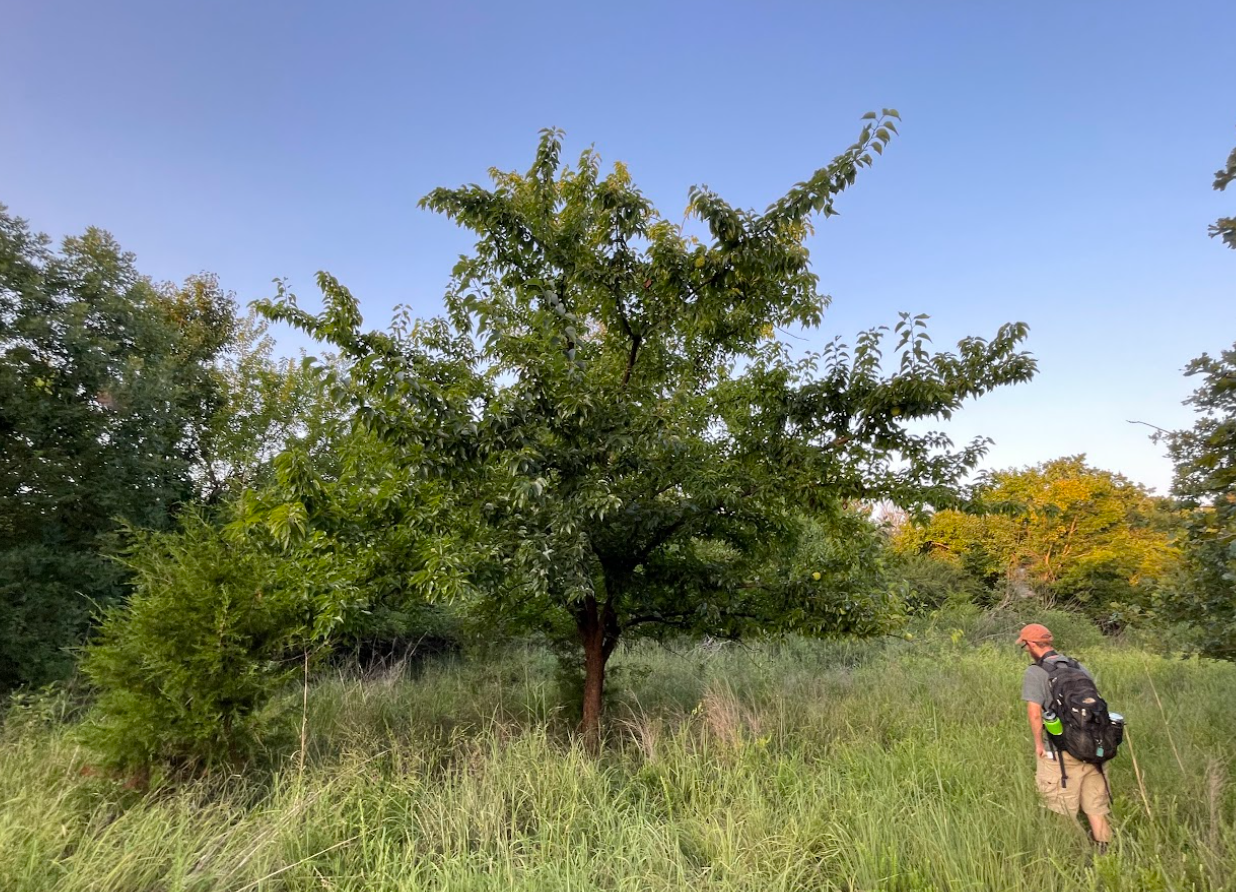
Medium tree, 20-50’ with low, spreading canopy
Full to part sun
Moist to dry soil
Blooms in mid spring
A peculiar medium-sized tree with a low, rounded canopy and grapefruit-sized knobbly green fruit. These fruits were likely eaten and their seeds dispersed by large, now extinct megafauna. This tree was prized by indigenous peoples for its limber reddish heartwood that produced durable bows. It was also used by early settlers and ranchers, who utilized its thorny branches, quick growth, and ease of propagation to create living fences of young trees for penning cattle or marking boundaries. Osage Oranges carry male and female flowers on separate trees, although lone female trees may sometimes produce infertile fruit. They are drought tolerant and adapt to a wide range of soils. Generally ranges from 20-40 feet at maturity.
Local Ecotype
Medium tree, 20-50’ with low, spreading canopy
Full to part sun
Moist to dry soil
Blooms in mid spring
A peculiar medium-sized tree with a low, rounded canopy and grapefruit-sized knobbly green fruit. These fruits were likely eaten and their seeds dispersed by large, now extinct megafauna. This tree was prized by indigenous peoples for its limber reddish heartwood that produced durable bows. It was also used by early settlers and ranchers, who utilized its thorny branches, quick growth, and ease of propagation to create living fences of young trees for penning cattle or marking boundaries. Osage Oranges carry male and female flowers on separate trees, although lone female trees may sometimes produce infertile fruit. They are drought tolerant and adapt to a wide range of soils. Generally ranges from 20-40 feet at maturity.