Local Ecotype
Perennial
Part Sun to full shade
Moist to medium soil
To 2-4’ tall, clump forming
Blooms in early summer
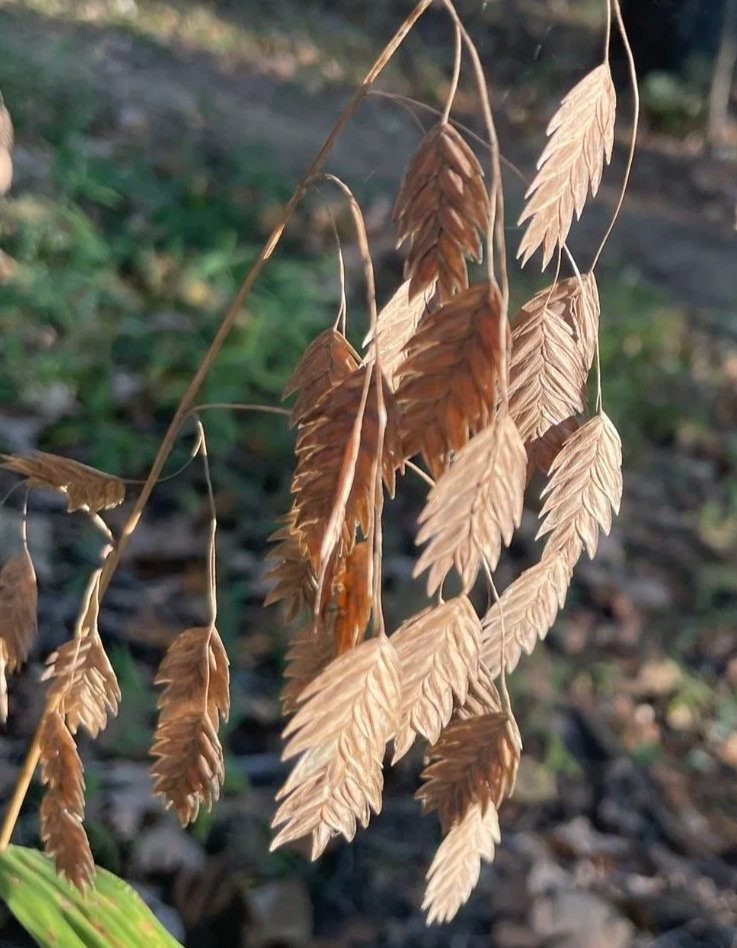
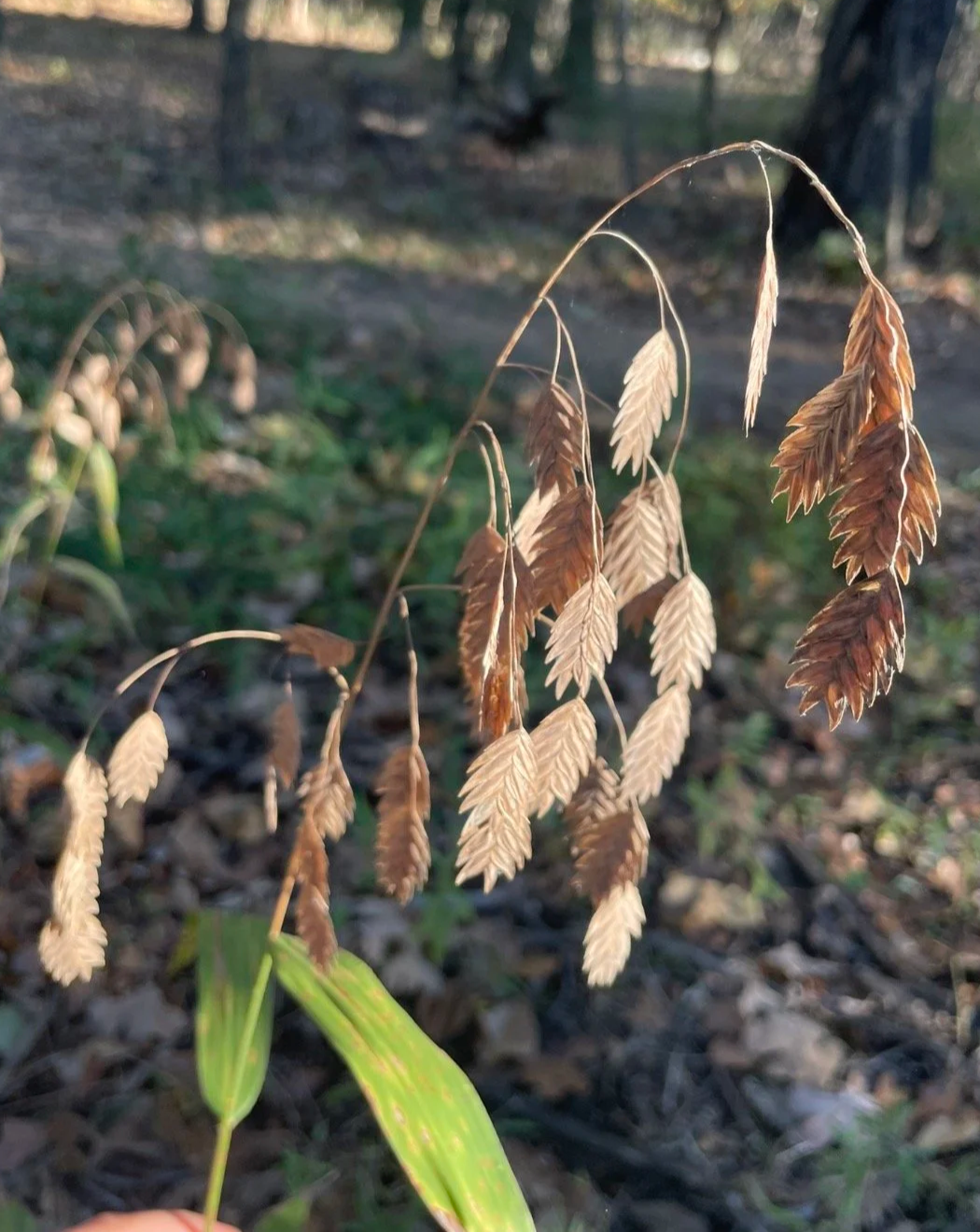
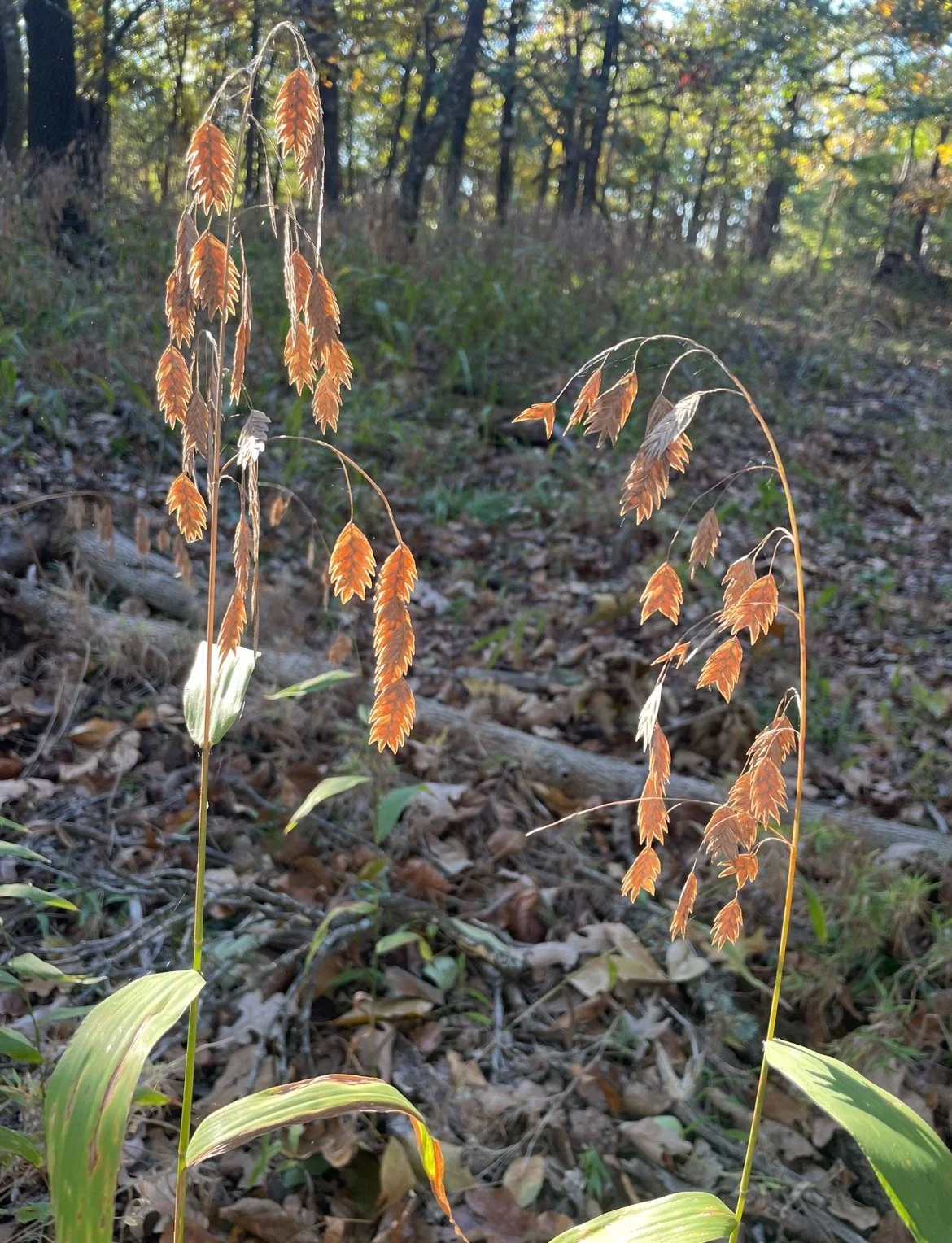
Inland Sea Oats’ standout feature is its endearing array of drooping spikelets, earning it the nickname “Fish on a fishing pole grass.” This elegant grass deserves a spot in every understory planting. Inland Sea Oats inhabits bottomland forests, semi open meadows, shaded uplands, and riparian zones. In favorable sites, it may form a continuous cover, often with other grasses like Hairy Wood Brome. This perennial grass is a host for the Northern Pearly Eye, as well as several of the Roadside Skippers. The starchy seeds are eaten by small mammals and game birds, and were winnowed into grain by some indigenous tribes.
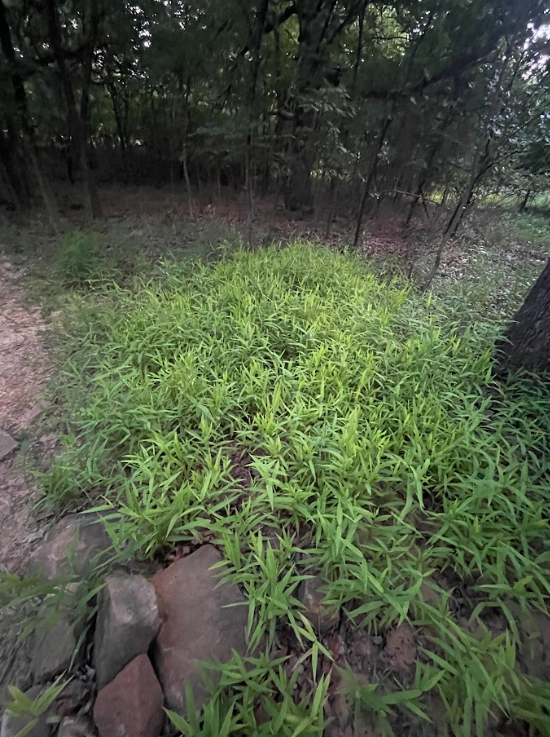
Inland Sea Oats is well suited for woodland gardens and grows best in part sun to moderately shaded conditions. It grows best in loamy soil that can be a little sandy or rocky. It prefers moderate soil moisture. Forms clumps over time, and may self sow. Looks pleasing as an en masse or block planting, mimicking its natural growth habit.
Local Ecotype
Perennial
Part Sun to full shade
Moist to medium soil
To 2-4’ tall, clump forming
Blooms in early summer
Inland Sea Oats’ standout feature is its endearing array of drooping spikelets, earning it the nickname “Fish on a fishing pole grass.” This elegant grass deserves a spot in every understory planting. Inland Sea Oats inhabits bottomland forests, semi open meadows, shaded uplands, and riparian zones. In favorable sites, it may form a continuous cover, often with other grasses like Hairy Wood Brome. This perennial grass is a host for the Northern Pearly Eye, as well as several of the Roadside Skippers. The starchy seeds are eaten by small mammals and game birds, and were winnowed into grain by some indigenous tribes.
Inland Sea Oats is well suited for woodland gardens and grows best in part sun to moderately shaded conditions. It grows best in loamy soil that can be a little sandy or rocky. It prefers moderate soil moisture. Forms clumps over time, and may self sow. Looks pleasing as an en masse or block planting, mimicking its natural growth habit.