Local Ecotype
Perennial
Full to part sun
Medium to dry soil
8-24” tall, can form large colonies
Blooms early summer
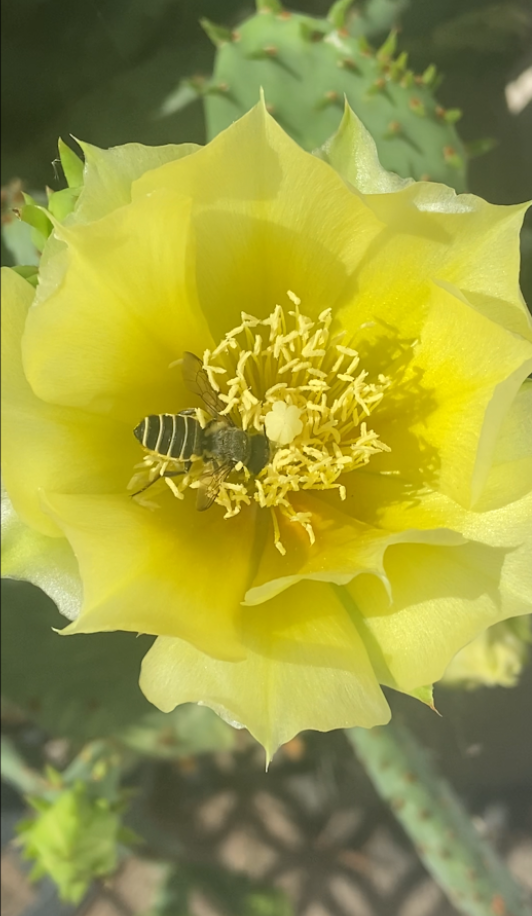
The most common native cactus throughout our area. Eastern Prickly Pear has large, fragrant yellow flowers in early summer, followed by seedy edible fruit that ripen to a pinkish red in fall. The flowers, while short-lived, are quite attractive to passing pollinators. As the plant grows new pads, it tends to slowly sprawl and root from the older pads, forming low clumps over time. This cactus is found in dry woodlands as well as more open habitats, and is much more shade tolerant than other cacti.
Eastern Prickly Pear grows best in full sun to part shade, in average to dry soil. While this succulent plant tolerates extended droughts, it looks more attractive in the garden if given occasional watering. Eastern Prickly Pear grows between 8-24” tall.
Local Ecotype
Perennial
Full to part sun
Medium to dry soil
8-24” tall, can form large colonies
Blooms early summer
The most common native cactus throughout our area. Eastern Prickly Pear has large, fragrant yellow flowers in early summer, followed by seedy edible fruit that ripen to a pinkish red in fall. The flowers, while short-lived, are quite attractive to passing pollinators. As the plant grows new pads, it tends to slowly sprawl and root from the older pads, forming low clumps over time. This cactus is found in dry woodlands as well as more open habitats, and is much more shade tolerant than other cacti.
Eastern Prickly Pear grows best in full sun to part shade, in average to dry soil. While this succulent plant tolerates extended droughts, it looks more attractive in the garden if given occasional watering. Eastern Prickly Pear grows between 8-24” tall.