Local Ecotype
Perennial
Part shade to Part sun
Medium to moist soil
2-4' tall
Blooms late summer to fall
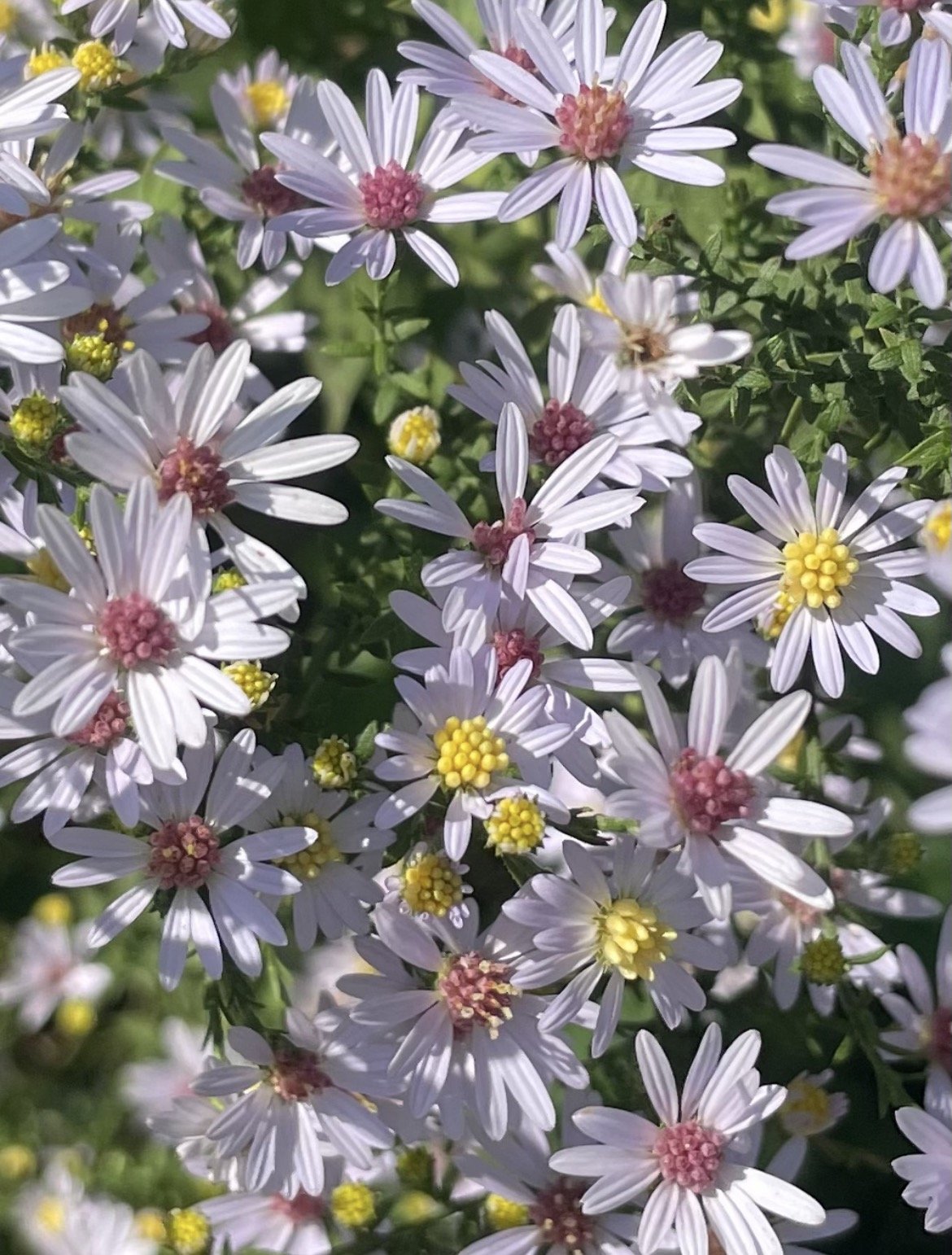
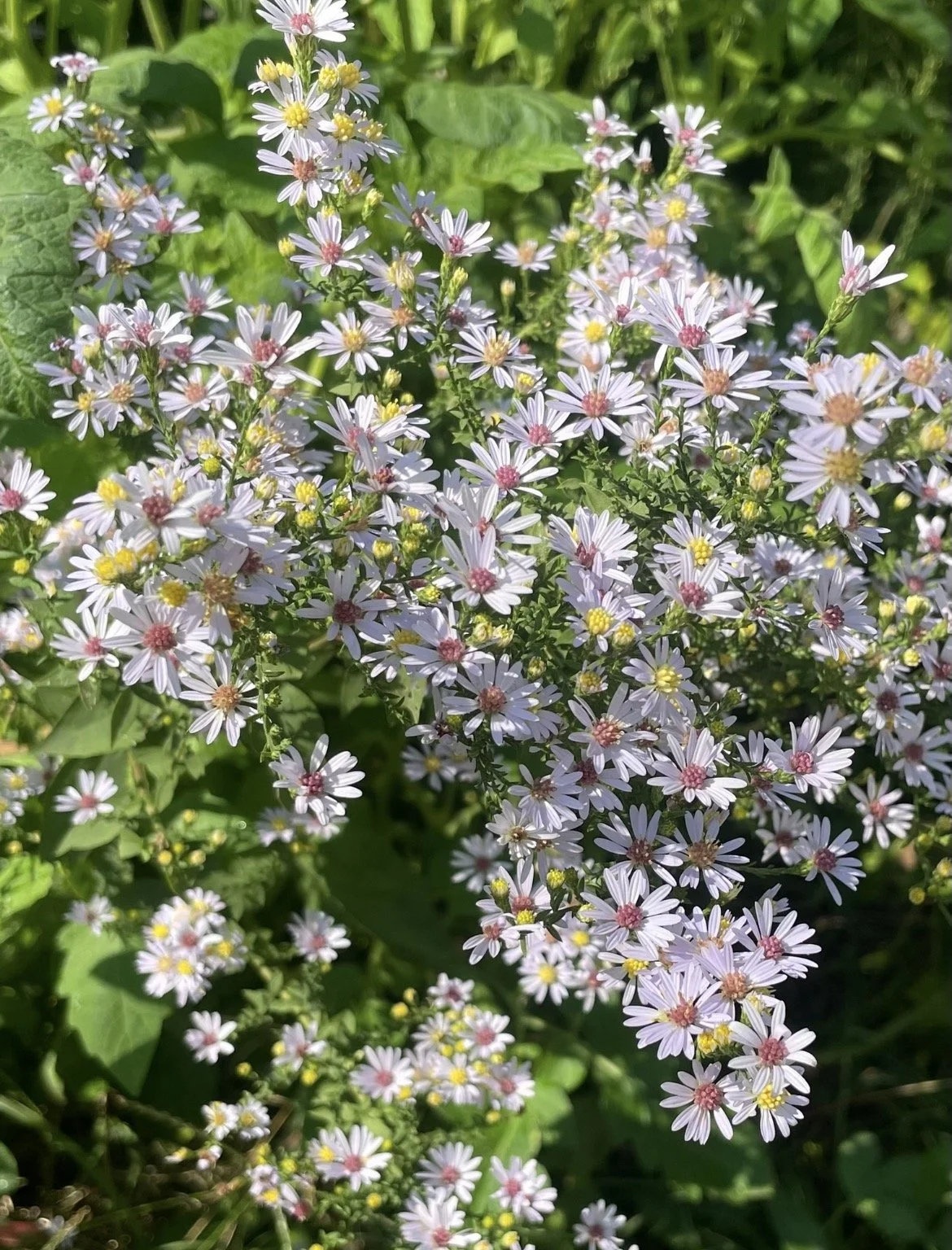
As late summer fades into fall and many other woodland wildflowers are beginning to fade, Drummond’s Aster prepares to put on a show. The erect stems it has been growing since spring erupt into tight clusters of copious small blooms ranging from white to lilac. These blossoms attract pollinators of all shapes and sizes, and its bloom period lasts up to 6 weeks. It has oblong, somewhat heart shaped leaves that persist through most of the year. Unlike many members of its genus, Drummond’s Aster doesn’t spread outward through rhizomes, instead maintaining a tight clump of multiple stems as it matures. It is an excellent late-season nectar resource.
Drummond’s Aster is often found in wooded habitats, and in the garden it prefers part sun to light shade, and moderate moisture. It will tolerate the occasional dry spell if protected from excessive sun. It generally grows 2-4 feet tall and around 2 feet wide. When planted in very rich soil with constant moisture, it may reach considerable size and flop heavily to one side, so consider this when planting if wishing to maintain a compact size and upright form. Drummond’s Aster is an easy to grow plant that may live for many years.
Local Ecotype
Perennial
Part shade to Part sun
Medium to moist soil
2-4' tall
Blooms late summer to fall
As late summer fades into fall and many other woodland wildflowers are beginning to fade, Drummond’s Aster prepares to put on a show. The erect stems it has been growing since spring erupt into tight clusters of copious small blooms ranging from white to lilac. These blossoms attract pollinators of all shapes and sizes, and its bloom period lasts up to 6 weeks. It has oblong, somewhat heart shaped leaves that persist through most of the year. Unlike many members of its genus, Drummond’s Aster doesn’t spread outward through rhizomes, instead maintaining a tight clump of multiple stems as it matures. It is an excellent late-season nectar resource.
Drummond’s Aster is often found in wooded habitats, and in the garden it prefers part sun to light shade, and moderate moisture. It will tolerate the occasional dry spell if protected from excessive sun. It generally grows 2-4 feet tall and around 2 feet wide. When planted in very rich soil with constant moisture, it may reach considerable size and flop heavily to one side, so consider this when planting if wishing to maintain a compact size and upright form. Drummond’s Aster is an easy to grow plant that may live for many years.