Local Ecotype
Woody shrub, 4-7’
Full sun to part shade
Wet to medium soil
Blooms in early summer to early fall
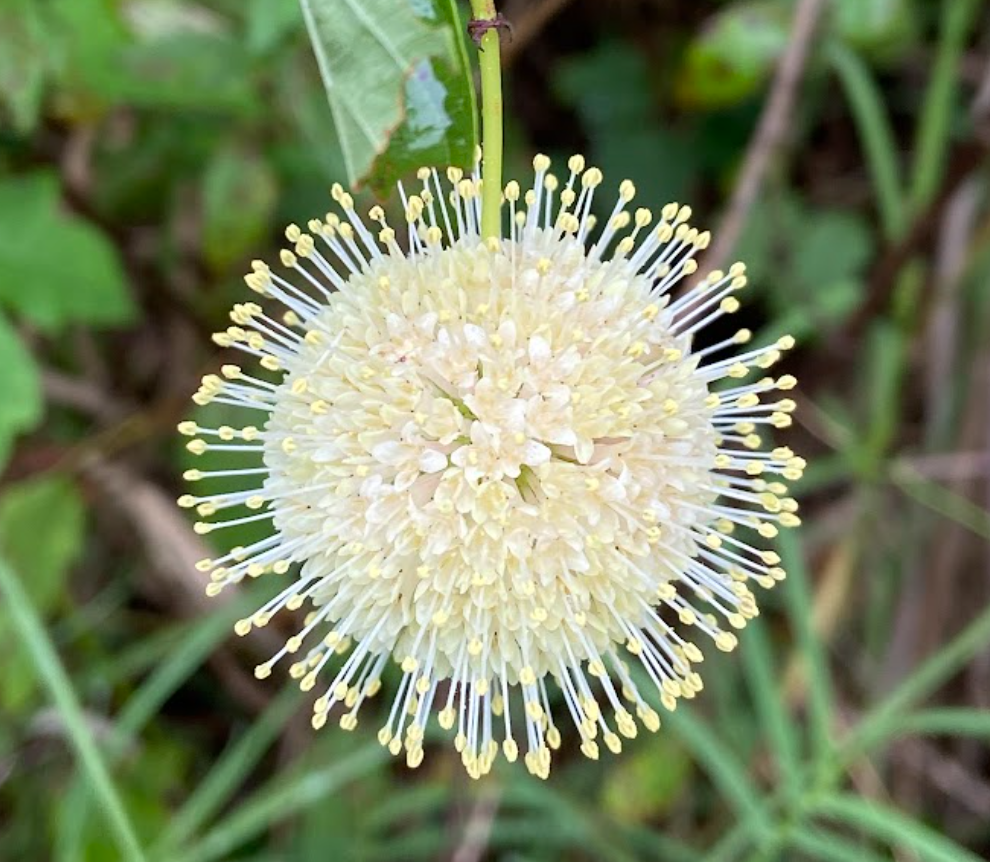
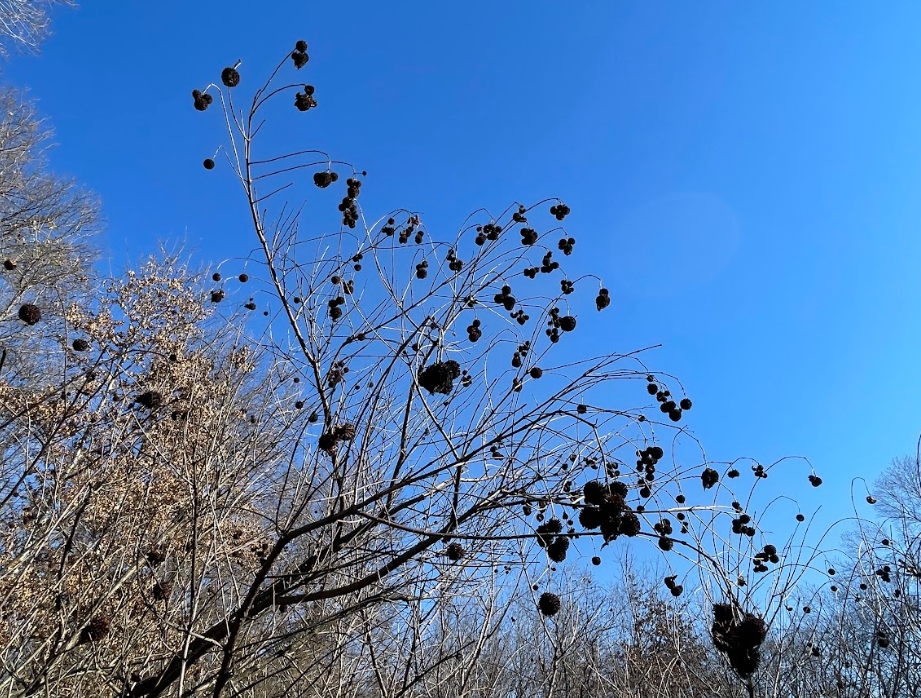
As spring turns to summer, Buttonbush begins producing its signature globose flowerheads with a delightful floral fragrance. The name Cephalanthus translates to “head of anthers”. This woody shrub is primarily a wetland plant, growing in marshes, ditches, stream courses, and the edges of ponds and lakes. The flowers attract bees, butterflies, and other insects. Wetland birds often nest among its branches.
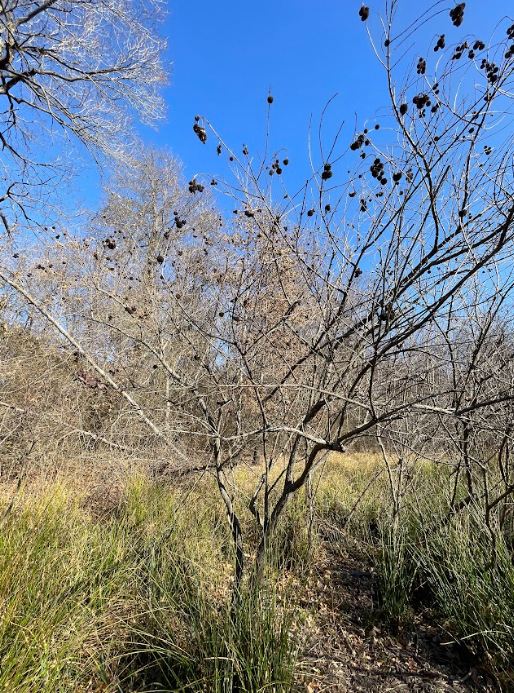
Although Buttonbush is a wetland plant, it does not require saturated soil, and will readily grow in average garden soil if kept evenly moist. It can be planted in full to part shade, with more blooms occurring in sunnier locations. Buttonbush is a long-lived shrub, with old, gnarled individuals reaching over 10 feet, although it has a modest growth rate and can easily be pruned to size.
Local Ecotype
Woody shrub, 4-7’
Full sun to part shade
Wet to medium soil
Blooms in early summer to early fall
As spring turns to summer, Buttonbush begins producing its signature globose flowerheads with a delightful floral fragrance. The name Cephalanthus translates to “head of anthers”. This woody shrub is primarily a wetland plant, growing in marshes, ditches, stream courses, and the edges of ponds and lakes. The flowers attract bees, butterflies, and other insects. Wetland birds often nest among its branches.
Although Buttonbush is a wetland plant, it does not require saturated soil, and will readily grow in average garden soil if kept evenly moist. It can be planted in full to part shade, with more blooms occurring in sunnier locations. Buttonbush is a long-lived shrub, with old, gnarled individuals reaching over 10 feet, although it has a modest growth rate and can easily be pruned to size.