Local Ecotype
Perennial
Full sun to part shade
Dry to medium
2-3’, clump forming
Blooms in late summer or early fall
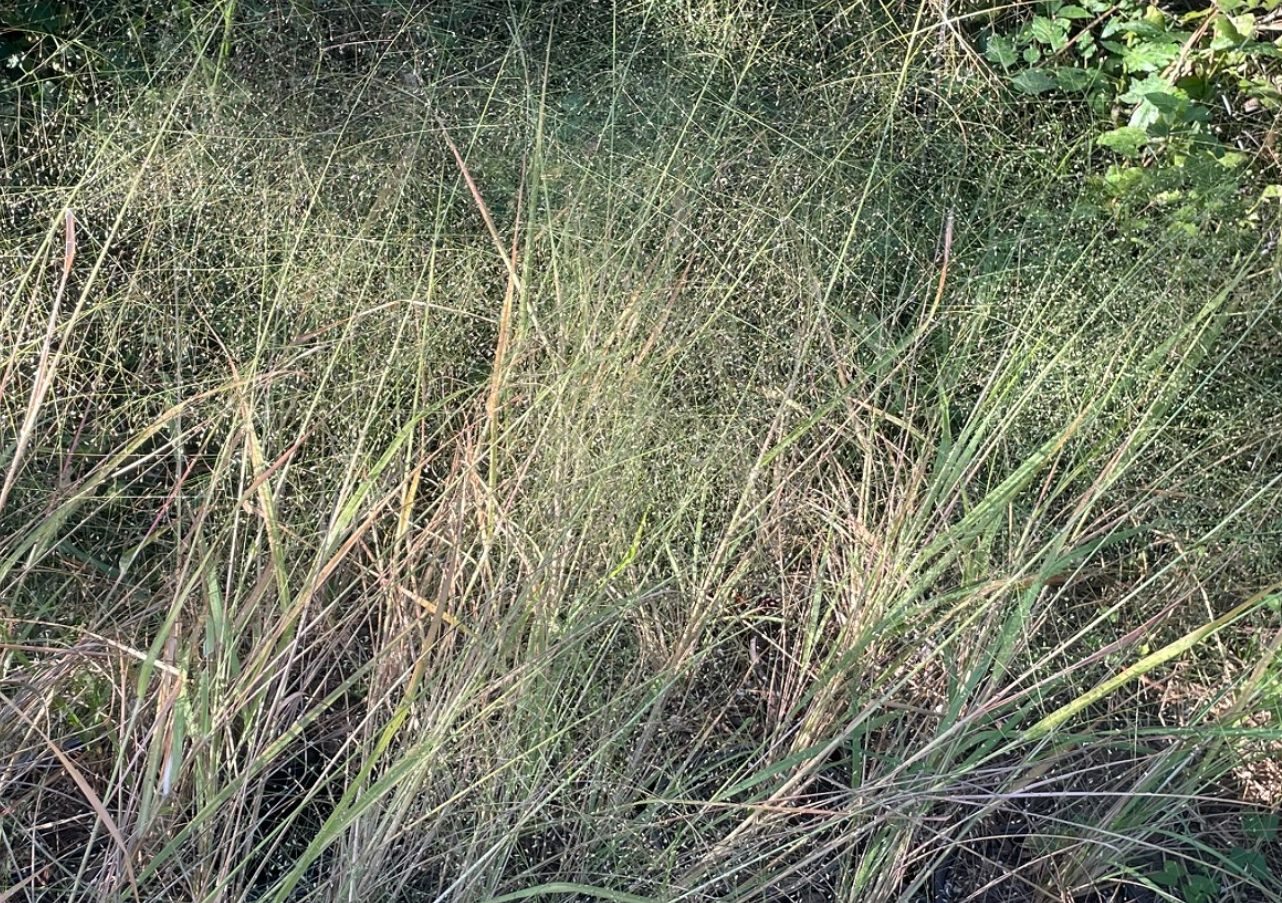
A warm season perennial grass with whimsically large inflorescences up to 3 feet, the largest of any Lovegrass! The combination of the giant panicle with its tiny spikelets gives the impression of a cloud of silvery mist in the landscape. Compared to the giant panicles, the vegetation is rather compact, reaching around 6-18” tall. Its seeds, though tiny, feed songbirds like sparrows and doves. This grass is a host for Zabulon Skipper and possibly other skippers as well. When mature, the tops have a tendency to detach and blow in the wind like a tumbleweed, which helps disperse the seed.
Bigtop Lovegrass is found in sandy prairies, floodplains, savannas, and open woodland, and boasts great drought tolerance as well as moderate shade tolerance. It is common on disturbed sandy soils, and prefers a well draining sandy or loamy soil in the garden. Grows best in full sun to part shade.
Local Ecotype
Perennial
Full sun to part shade
Dry to medium
2-3’, clump forming
Blooms in late summer or early fall
A warm season perennial grass with whimsically large inflorescences up to 3 feet, the largest of any Lovegrass! The combination of the giant panicle with its tiny spikelets gives the impression of a cloud of silvery mist in the landscape. Compared to the giant panicles, the vegetation is rather compact, reaching around 6-18” tall. Its seeds, though tiny, feed songbirds like sparrows and doves. This grass is a host for Zabulon Skipper and possibly other skippers as well. When mature, the tops have a tendency to detach and blow in the wind like a tumbleweed, which helps disperse the seed.
Bigtop Lovegrass is found in sandy prairies, floodplains, savannas, and open woodland, and boasts great drought tolerance as well as moderate shade tolerance. It is common on disturbed sandy soils, and prefers a well draining sandy or loamy soil in the garden. Grows best in full sun to part shade.